The now disused Ancoats Mills Complex was once at the heart and soul of Manchester’s industrial community – a time now long gone. The imposing mills produced products like cotton, glass and chemicals and were affectionately termed “the workshop of the world”. What is now Anita Street was previously known as Sanitary Street, due to its row of dedicated workers’ residences, which were always kept in spick and span condition.
The Bolton Museum, Aquarium and Archive has recently had a revamp and now boasts an exhibition on local history. More displays have also been added, dedicated to the life and times of the people who lived here, such as Samuel Crompton. This man will forever go down in history as being the inventor of the Spinning Mule. This revolutionised the cotton industries in Manchester and Lancashire, and allowed it to grow exponentially as production took off.
Visitors can choose a hotel in Manchester by comparing the prices of the wide range on this website.
The Secrets of Chocolate Museum takes the visitor on a fascinating journey through the history of the cocoa bean and chocolate, the covetable product made from it that influenced eras and civilisations. Begin the tour by watching an informational film on cocoa and chocolate, before walking around the 8611 square feet museum. Interact with the learning materials on how cocoa beans are turned into chocolate. On conclusion of the tour, watch a demonstration given by a professional chocolate-maker.
The Rohan Palace took a decade to build, finally reaching completion in 1742. It originated as the home of prince-bishops, but nowadays is the site of three Strasbourg museums. These are the Decorative Arts Museum, the Fine Arts Museum and the Archaeological Museum. The Decorative Arts Museum is situated in what used to be the sumptuous apartments of Cardinals, and contains many fine furnishings, ornaments, paintings and tableware dating from the late 1600s right up to the mid 1800s. In the Fine Arts Museum on the first floor, admire the many fabulous paintings from the 1300s up to 1870. The Archaeological Museum is situated in the Rohan Palace basement. Its massive collections of Alsatian, bronze and iron age, Merovingian, Neolithic and Gallo-Roman artefacts, some of which date from 600,000 BC, make it one of France’s best museums.
Find good deals on hotels in Strasbourg in our range of hotels in France. Continue reading
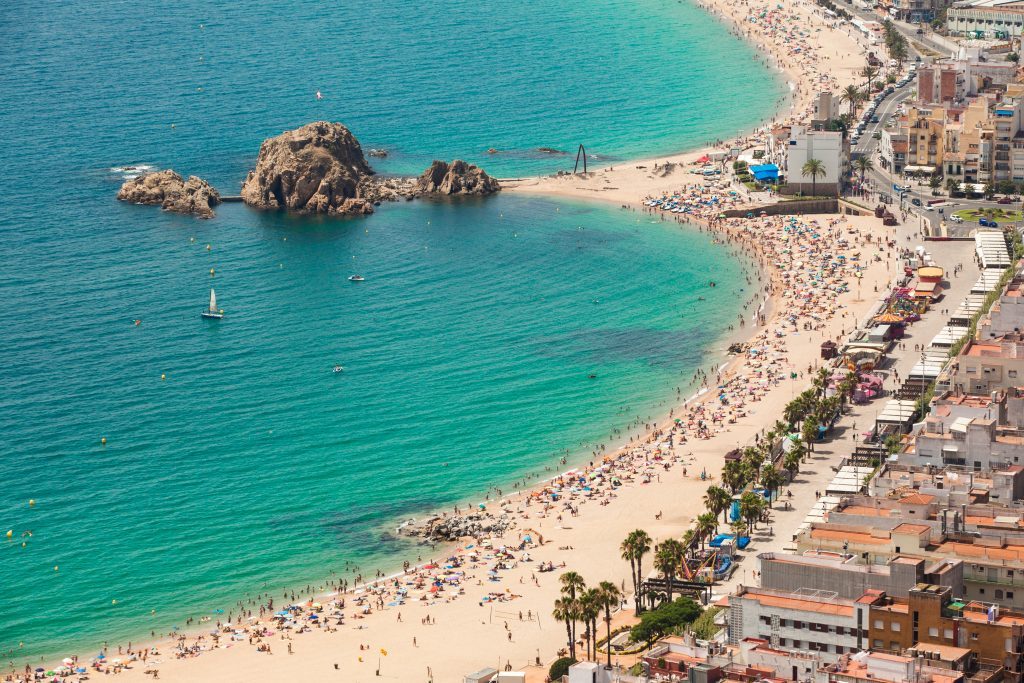
Kvarner is definitely one of the most beautiful regions in Croatia, as this is where you will find the awe-inspiring Absytrus Islands of Krk, Cres and Lošinj. Absytrus was the brother of Medea. The islands that are named after him are steeped in history and legend. The internationally known Apoxiomen, by the Greek sculptor Lizip, was discovered off the coast of Lošinj in the late 90s. This athlete cast in bronze dates back to the 4th century B.C. The famous Baška tablet was discovered on Krk. The Crikvenica, Rijeka, Opatija and Vinodol Rivieras are also located in the Kvarner region.
The most popular drinks in the Kvarner region are Vrbnicka Žlahtina, a white wine produced in Vrbnik, and Trojšcina, a white wine produced on Susak Island. These are soaked up by Kvarner scampi (the Adriatic’s biggest and best), lamb served with sheep cheese or šurlice, a type of pasta from Krk Island eaten with seafood or goulash. Rab cake and Lovran chestnuts finish off a traditional meal in this region of Croatia.
Visitors can find the best prices for hotels in Croatia at Hotel Reservations Global. Continue reading
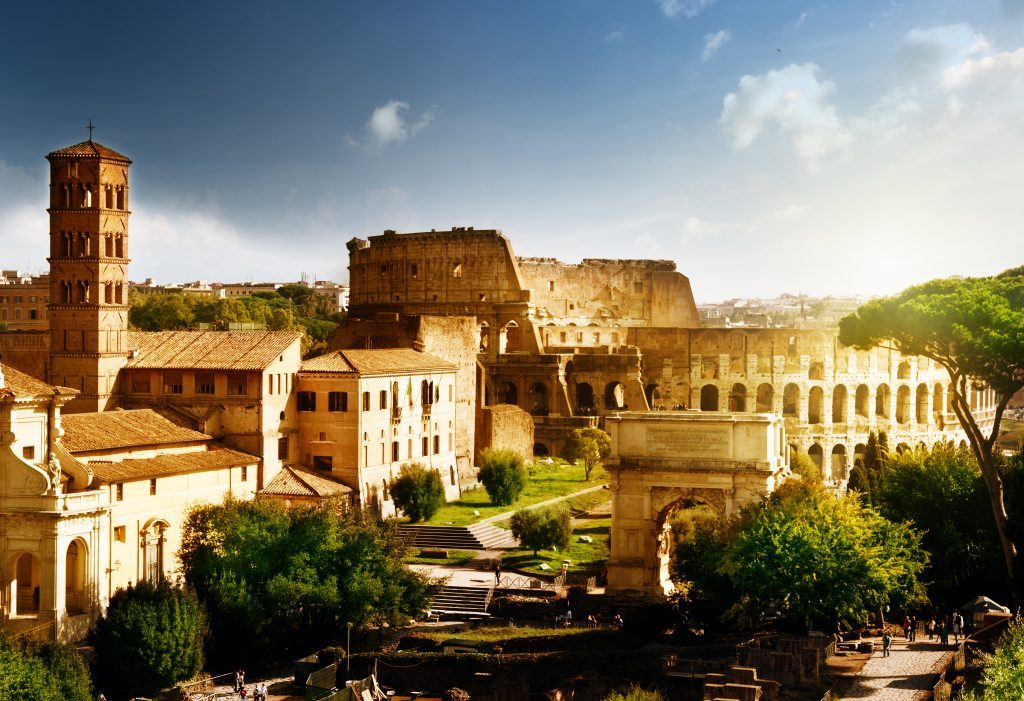
The squares of Rome are what many visitors associate with the city. In essence, they are a part of what gives the modern capital city its character. The inhabitants of Rome use the Piazzas as meet up points, entertainment, general socialising, parties and festivals or the daily ‘happy hour’. Situated on Capitol Hill, Piazza del Campidoglio is where the Government sits. Meanwhile, Piazza Venezia is considered the heart of Rome, while Piazza Navona is famous for its magnificent Baroque buildings, and Piazza di Spagna is known for being the home of the Spanish Steps. Those visiting St Peter’s Basilica first pass through St Peter’s Square. In all, the Piazzas tell the story of Rome that spans over a millennia of history.
Over 200 chapels and 19 basilicas are encircled by the ancient Aurelian Walls. The most notable of the basilicas are St Peter’s, the biggest on earth; St John in Lateran, the world’s oldest church, where the bishop used to live; and Santa Maria Maggiore. A number of the chapels date from early Christianity, when they originated as centres of protection for believers who were escaping persecution. These religious refugees met in buildings which were termed domus ecclesiae. As the years wore on, churches grew up around these buildings which were over the centuries altered, renovated or in some cases completely rebuilt.
Visitors can compare prices and find the best deals for hotels in Rome from our range of hotels in Italy.
Within a relatively short period of time after Auschwitz-Birkenau was liberated in 1945, people were coming to see for themselves the horrors that happened here. Almost everything in Auschwitz I and Auschwitz-Birkenau is on show – such as the gas chambers, crematoria and huts that the inmates lived in. A tour lasts about an hour and a half, and is available in 15 languages. General unguided entry is free. The theatre shows a 15 minute documentary on the liberation of Auschwitz-Birkenau, which now is a museum honouring all who suffered or died during the Holocaust.
Since the 13th century people having been gathering in Main Square (Rynek Glowny), first to sell their wares and now to socialise. The Adam Mickiewicz Monument is a useful base from which to orientate yourself for some exploration. Here there are many restaurants and cafes where you can eat or drink al fresco and watch the world go by. It is also where you can hire a horse and carriage for a few hours to see a different perspective of the capital. The buskers are always very entertaining. However, infinitely larger entertainment events such as the International Parade of Dragons, Great Orchestra of Christmas Charity and New Year’s Eve party are also held here.
Visitors to Krakow can find the best accommodation deals for Hotels in Krakow from our range of hotels in Poland. Continue reading
Warsaw began life as a humble fishing village but during the late 1300s it started to develop and continued to do so until it was made the capital city of Mazovia in the early 15th century. In the late 16th century it became the medieval capital city of Poland. In the mid 1600s Warsaw was attacked by armies who arrived from Sweden, Transylvania and Brandenburg, resulting in the eventual carving up of Poland amongst Russia, Prussia and Austria in the late 1700s. In the early 19th century Warsaw was reinstated as the Polish Kingdom’s capital city, although it was still ruled from a distance by Imperial Russia. Subsequently the capital developed and grew as centres of learning, transport networks, roads and essential infrastructure such as a sewerage system came into being to cater for the burgeoning population. When Poland became an independent country in the early 20th century the city retained its status as capital.
The Nazis forcibly entered the city shortly after the start of World War II. The inhabitants tried to revolt twice in subsequent years, but these were both in vain, resulting in the deaths of over 500,000. 1943 was the year of the Warsaw Ghetto Uprising, when the Nazis laid siege to what remained of the Jewish population. After a month the Ghetto was razed, along with much of the city such as the Royal Castle. In 1944 the Warsaw Uprising occurred when the Polish Home Army, aiming to gain freedom for the city, resisted against the Nazis. So called Soviet liberators were approaching, but the civilians did not trust them as they were co-conspirators with the Nazis when they initially entered the country.
Visitors to Warsaw can find the best accommodation deals for Hotels in Warsaw from our range of hotels in Poland. Continue reading